


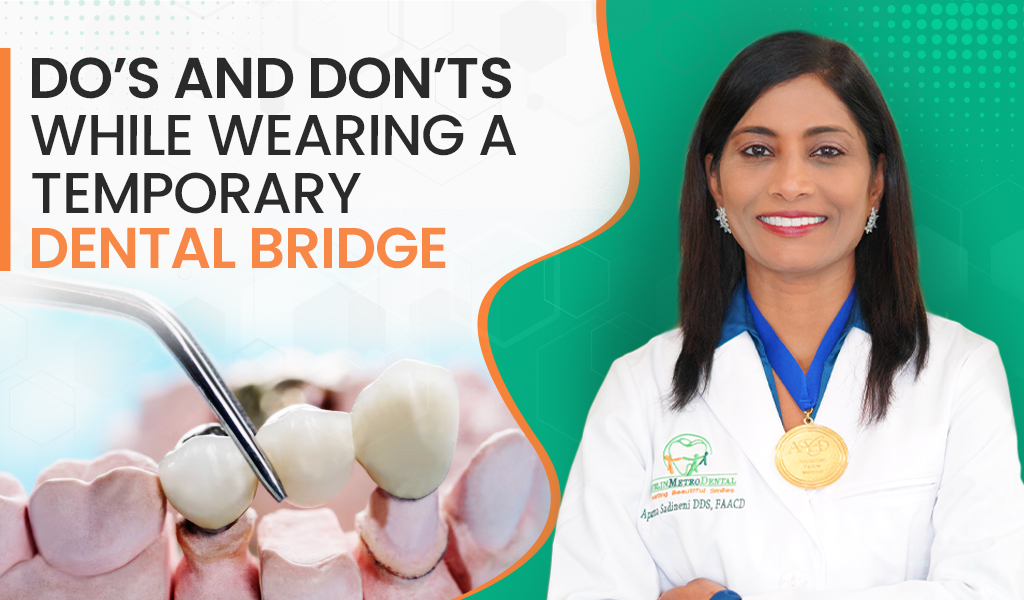
Having a temporary dental bridge is a major highlight in your journey of smile restoration. Although this stage is brief, it is a very crucial part of your process, as it helps to protect your teeth and gums until your final bridge is ready.
A temporary dental bridge is more than just a temporary solution. It protects your prepared teeth, maintains the correct gap, and helps to ensure that your final dental bridge is a perfect fit. Nevertheless, since it is constructed from acrylic and temporary cement, it needs to be handled with care.
In this article, we will provide you with valuable information on how to care for your temporary dental bridge, so you do not experience any complications.
What is a Temporary Dental Bridge?
A temporary dental bridge is placed after your teeth have been prepared and before your permanent dental bridge is cemented. A temporary dental bridge is typically made of a hard acrylic material that can be removed by your dentist using temporary cement.
The purpose of placing a Temporary Dental Bridge is to:
- Protect the exposed dentin, thus preventing sensitivity
- Prevent the teeth from shifting
- Hold the gum tissue in the correct position
- Maintain aesthetics and function
As it is not as strong as a permanent dental bridge, it is important to be extra careful during this time.
-
Immediate care after wearing the temporary dental bridge
DO
- Avoid eating or drinking for at least 30 minutes after cementation to allow the temporary cement to set properly.
- Wait until the anesthesia wears off before eating to avoid biting or injury.
DON’T
- Chew immediately after placement.
- Test the bridge by biting down on hard foods.
Eating with a temporary dental bridge
Your temporary bridge should not be treated like a fully functional tooth. Eating smart is all the difference.
DO: Eat Smart & Soft
- Chew on the opposite side of your temporary bridge
- Eat soft and easy-to-chew foods
- Take small bites and chew slowly
DON’T: Avoid These Foods
- Sticky foods such as gum, caramel, or taffy
- Hard foods such as nuts, popcorn, ice, or hard candy
- Crunchy breads such as bagels or crusty rolls
These foods can cause the temporary cement to loosen or dislodge.
-
The ‘soft food’ rule
A soft food diet helps reduce the pressure on the temporary bridge and allows the gum tissues to heal comfortably.
Soft Food Do’s
- Mashed Foods: Potatoes, sweet potatoes, avocado, squash
- Soups: Creamy tomato soup, lentil soup, vegetable soup, chicken broth
- Eggs: Soft scrambled eggs
- Smoothies: Fruits, yogurt, milk, and protein powder
- Yogurt & Cottage Cheese: Gentle and nourishing
- Steamed Vegetables: Broccoli, carrots, cauliflower
- Soft Fruits: Bananas, mangoes, berries, melons
Soft Food Don’ts
- Raw vegetables
- Nuts and seeds
- Sticky dried fruits
- Tough meats like steak or jerky
- Extremely hot or cold foods
- Carbonated drinks may cause irritation
-
Oral hygiene with a temporary dental bridge
Oral hygiene is important, but doing it the right way makes all the difference.
DO
- Brush your temporary bridge gently, as you would your natural teeth
- Use a soft-bristle toothbrush
DON’T
- Floss between teeth upward
How to Floss Correctly:
- When flossing, insert the floss carefully and pull it out to the side, not up. This will prevent the bridge from coming loose.
- Temporary bridges may not be conducive to full bridge flossing methods. This is normal.
What if the temporary bridge comes off
This is more likely than patients realize, and it is essential to take immediate action.
- Call your dentist to have it re-cemented
- Do not leave it out for more than a couple of days
If the Office Is Closed:
- Clean the bridge carefully
- Use Fixodent or Dent-Temp (obtainable at pharmacies)
- Put a small amount inside the bridge and seat it carefully
- Call the office as soon as it reopens to have it professionally re-cemented
Never disregard a loose or fallen temporary bridge, even if there is no pain.
Why Choose Dublin Metro Dental
At Dublin Metro Dental, the needs of our patients come first. Our experienced dental staff will make sure that every temporary dental bridge is carefully placed with precision and clear aftercare instructions, ensuring a smooth transition to your permanent dental restoration.
From preventive care to restorative dentistry, crowns, and bridges, we are here to guide you every step of the way.
📞 Do you have questions or concerns? Call us anytime at (614) 766-5600
📍 Serving patients in Columbus, Ohio
Final Thoughts
The temporary dental bridge is a brief but very important step in the smile restoration process. With proper care, intelligent eating, and practicing good oral hygiene, you can protect your dental investment and ensure success.
This is only temporary, but your healthy, confident smile is here to stay.
Frequently Asked Questions
1. How long will I have to eat soft foods?
Usually 1-2 weeks, depending on healing and the complexity of the bridge.
2. Can I drink coffee after the bridge is put in?
Yes, but wait until the sensitivity decreases and let it cool completely.
3. What if I bite down on something hard by accident?
Check for pain or looseness and consult your dentist if anything doesn’t feel right.