


Natural teeth can last a lifetime but can be impacted by cavities, cracks, infection, worn enamel, injuries, and gum issues. If damage has occurred, it is not always necessary to pull the tooth. Today’s restorative dentistry can often repair damaged teeth and restore their function.
Restorative dentistry is focused on the restoration of teeth that are broken or weakened back to a state of healthy function. Depending on the issue, this can be addressed by a dentist with just a filling, a crown, root canal therapy, or other restorative procedures. The aim is straightforward, to save the natural tooth if it is safe to do so.
What is Restorative Dentistry?
Restorative dentistry is a specialty of dentistry that concentrates on repairing or replacing teeth that are damaged, decayed, weakened, or missing.
However, dental restoration services are more concerned with the appearance of the tooth than they are with:
- Structure and strength
- Function during chewing
- Overall oral health
- Long-term stability
- Surrounding teeth
Sometimes a small dental issue can become a bigger one if it’s not treated early using restorative methods.
Why Natural Tooth Preservation Matters
Natural tooth preservation is always preferred, if possible, as a natural tooth is especially adapted to your mouth.
A healthy natural tooth helps you in:
- Natural chewing: Natural teeth have evolved to chew food effectively.
- Jawbone stimulation: Tooth roots stimulate surrounding jawbone.
- Proper alignment: Each tooth plays a role in other teeth’s position and stability.
- Natural sensation: When you bite and chew, natural teeth give you a sensation.
- Normal dental function: Retaining one’s teeth may contribute to normal dental function.
That is why dentists would prefer to save a tooth instead of extracting it if it can be safely restored.
Most Common Issues That Can Harm Natural Teeth
There are a few common issues that can happen, which can affect natural tooth preservation over time if they are not handled.
Tooth Decay
Cavities can start as small spots of damage to the enamel. If left untreated, decay can continue to penetrate the tooth and eventually into the pulp. A filling can replace the damaged area and prevent the need for more advanced care.
Cracked or Broken Teeth
Cracks can occur either due to an accident, biting down on firm foods, grinding your teeth or poor tooth structure. If the crack is deep or the structure of the tooth is compromised, a dentist may need to cover the remaining tooth structure with a crown.
Worn Teeth
Enamel can wear down over time due to repeated grinding, the consumption of acidic food, and other factors. Regenerative therapy can help repair the damaged areas and re-establish normal function.
Dental Infections
If the decay or trauma goes beyond the tooth’s outer enamel to the inner dentin and pulp, infection may occur. Root canal therapy by a dentist can be performed to eliminate infected tissue without the need to replace the natural tooth.
Restorative Dentistry Is Not Just About Repair
The treatments applied by restorative dentists vary according to the level of damage. Early detection of the problem will give more possibilities to treat the problem conservatively.
1. Dental Fillings
Fillings are one of the most typical restorative procedures. If there is decay, the dentist will cut the decayed area out of the tooth and fill the hole with a filling. A filling can:
- Prevent further decay of the tooth. Prevent further decay of the tooth.
- Restore the tooth’s shape.
- Improve chewing function
- Help to preserve other tooth structure.
Getting the cavity treated early will help to stop the decay spreading to other areas of the tooth.
2. Dental Crowns
Severe tooth decay can require a filling to be less effective than the protection needed. A dental crown is a cap that covers the top part of the tooth to prevent further damage. Crowns can be used for teeth that have extensive decay, large fillings, cracks, or root canal treatments.
When appropriate, a crown can also restore a tooth so that it will function without needing to be extracted.
3. Root Canal Treatment
Many people are afraid of the root canal procedure, yet the idea of the treatment is to preserve the tooth.
If the pulp tissue inside a tooth is infected or is very swollen, just covering the outside of the tooth may be insufficient.
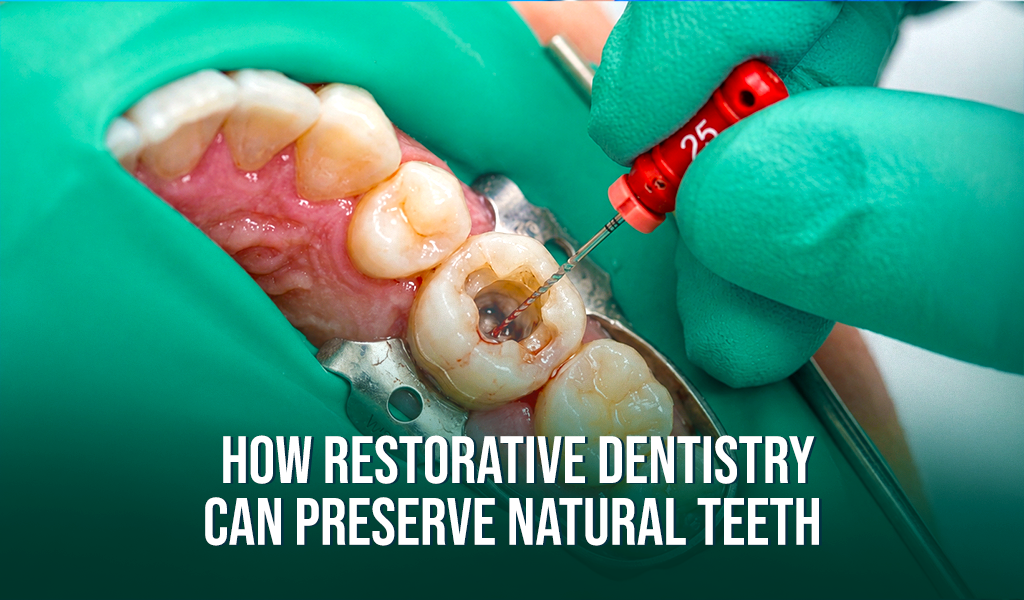
A dentist clears away the pulp and then cleans and disinfects the root canal system and seals the tooth during the root canal treatment. An appropriate restoration by a restorative dentist in Dublin can then be placed to protect the tooth.
Importance of Early Treatment with Restorative Dentistry
Timing is one of the most important aspects of the successful preservation of a tooth. A small hole can be treated with a straightforward filling. However, if left untreated, the decay can worsen and spread to the pulp, requiring more intensive treatment.
Look out for symptoms such as
- Persistent toothache
- Sensitivity to hot or cold.
- Pain while biting
- Swelling that occurs around a tooth.
- Cracks or chips that can be seen.
- Repeatedly getting food stuck between the teeth.
- A darkening or discoloration of the tooth.
Persistent changes do not necessarily indicate that restorative treatment is required but should be assessed by a dentist.
Bottom Line
Restorative treatments may be prescribed for natural tooth preservation with expert services. The secret lies in not allowing a small dental issue to escalate to a large problem. Early diagnosis, timely intervention, and regular oral care can go hand in hand to save your natural teeth longer.
If you have any of these symptoms and the pain persists, cracks, damage, sensitivity, and swelling in your teeth should be assessed by a dentist. The earlier a problem is caught, the more chances there will be to save the tooth with the proper natural structure.
Frequently Asked Questions
What is restorative dentistry?
Restorative dentistry aims to restore and maintain the function of damaged or decayed teeth while preserving the natural tooth anatomy.
Is tooth extraction preventable with restorative dentistry?
In many cases, when a tooth is suitable to be restored, yes, treatments like fillings, crowns, and root canals can save the natural tooth.
Why is it important to treat the patient early?
If treatment takes place early, minor dental issues can be prevented from turning into more severe ones, which might require extensive treatments.