


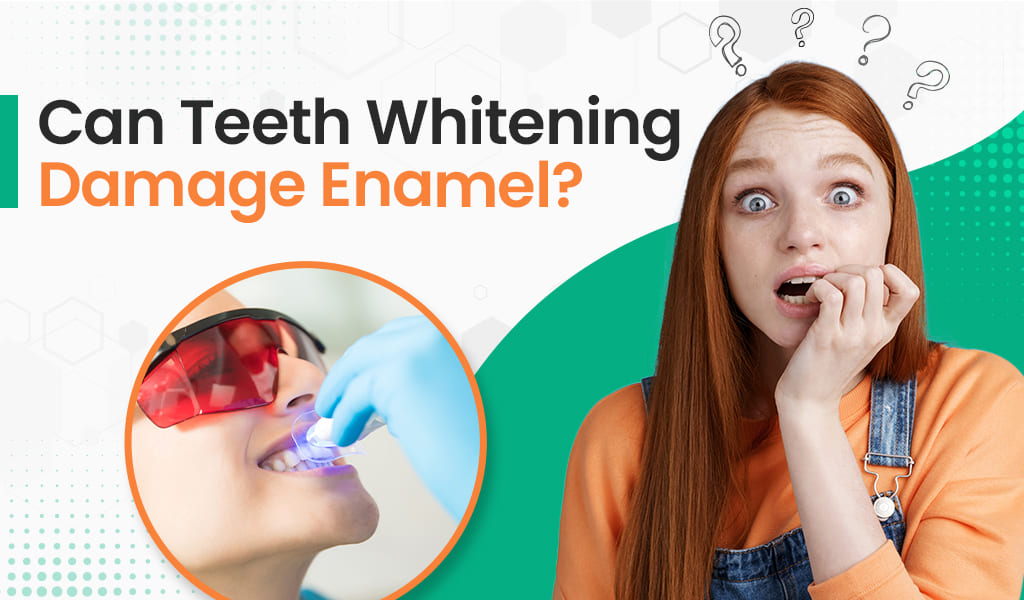
We all want a brighter and more confident smile. With the increasing level of interest in cosmetic dentistry procedures, tooth whitening is first on the list of those requesting cosmetic dental work globally. However, most patients still hesitate because of the following concern:
Is teeth whitening harmful to the teeth’s enamel
The short answer to this is, of course, no. Teeth whitening is perfectly safe when it’s done well, specifically, when it’s done under professional supervision and doesn’t damage the structure of the teeth at all.
If you’re thinking of undergoing a teeth whitening treatment, this guide can inform you about how the process is carried out, whether it is safe to enhance the color of your teeth without risking damage to your enamel.
How does Teeth whitening actually work?
Teeth whitening procedures involve the bleaching compounds known to disrupt stains developed on your teeth over time, due to common compounds such as hydrogen peroxide and carbamide peroxide.
The process works like this:
- The coloring gel goes into the enamel ( covering the outwards layer of your tooth).
- It penetrates the tooth all the way down to the dentin, the area beneath the enamel where deeper color resides.
- The gel breaks the stain molecules into smaller pieces chemically. This causes the teeth to be lighter.
- After the treatment, your teeth rehydrate back to their balanced natural state.
Such a process does not harm any part of the enamel’s surface composition. Nevertheless, during this phase of dehydration, teeth may become more susceptible to stains from any substances consumed or ingested in comparison to other situations. As a result, dentists advise patients to refrain from coffee, tea, red wine, smoking, and dark-colored meals 24-48 hours after a whitening process.
Can Teeth whitening Cause Side Effects?
Although whitening is not detrimental when done on healthy teeth, there may be some side effects.
-
Tooth Sensitivity (Most Common)
Is teeth whitening painful? is a common question that is asked
Not exactly, but yes, temporary sensitivity may result.
Why does it happen:
The peroxide goes into the enamel and temporarily irritates the tooth nerve.
What it feels like:
A slight zing when consuming hot or cold drinks.
How to manage it:
Using a desensitizing toothpaste, take breaks between whitening sessions. Choose professional whitening instead of DIY kits. The good news is that sensitivity normally ends in a few days.
-
Gum Irritation
If your gums come into contact with whitening gel, you could experience:
- Mild Redness
- Tendermess
- White Patches (temporary)
This phenomenon is more often related to ill-fitting trays, usually those that come with the over-the-counter kits. Professional teeth whitening uses custom trays with the added advantage of a barrier that reduces the possibility.
-
Can Teeth Whitening Damage Enamel? (Rare but Possible with Misuse)
Teeth whitening will not harm enamel if performed correctly. The only worry with products causing enamel damage is the misuse of them.
Risk factors include:
- Overusing whitening products
- Leaving gel on longer than the appointed time
- Using unregulated or abrasive whitening products
- Whitening without previously addressing cavities or gum disease
For this reason, dentists strongly recommend professional guidance, specifically if one is to pursue teeth whitening in Columbus, Ohio.
-
Irregular Whitening of the Teeth
The following are some of the reasons for such patchy results in some patients:
- Inconsistent application due to home bleaching kits.
- Natural variations in tooth enamel
- Existing dental restorations
How to Whiten Your Teeth Safely?
In order to get a safer and longer-lasting effect on teeth whitening, you must follow these professional guidelines:
✔ Consult Your Dentist First
Your dentist will:
- Check for cavities or gum disease
- Determine if whitening is suitable
- Suggest the best for your stain type
✔ Choose Professional Whitening When Possible
Benefits include:
- Faster results
- Even Whitening
- Reduced sensitivity
- Enamel Protection
✔ Always Follow Instructions
Never:
- Apply whitening gel past the suggested time
- Whiten more frequently than
- Combine multiple products at once.
✔ Avoid Overuse
Excessive whitening does not mean effective whitening. Be careful not to irritate the nerves and/or enamel.
✔ Use Desensitizing Toothpaste
There are some products that have potassium nitrate or fluoride, and could help to reduce any discomfort.
Professional Teeth Whitening in Columbus Ohio
As you consider teeth whitening, you can rest assured that professional in-office treatments are the safest methods to attain extreme results.
Philips Zoom In-Office Whitening
This advanced system can:
- Whiten teeth up to 8 Shades
- Deliver results in under 45 minutes
- Safely minimize sensitivity
- Protect enamel integrity
How the procedure works:
- Dr. Sadineni & team prepare your teeth and gums
- A professional-grade whitening gel is applied
- A specialized LED light can speed up the process.
- The process is repeated over controlled cycles
- A post-treatment gel is also applied to reduce sensitivity as well as to prevent enamel.
The end result: a brighter, whiter smile in just one visit!
Final Thought
So, does teeth-whitening damage teeth?
No, if teeth whitening is completed properly, everything will be just fine.
Some sensitivity of the teeth or gum irritation may be encountered, although it is minor and easily treated.
If you’re ready to boost your smile safely with a professional teeth whitening treatment in Columbus Ohio, schedule a consultation with Dr. Sadineni at Dublin Metro Dental. They utilize state-of-the-art equipment to give you fantastic results in a safe environment to maintain a healthy smile.
A brighter smile not only enhances physical appearance but can greatly enhance self-confidence, initial impression and self-esteem.
Frequently Asked Questions
-
How long does professional teeth whitening last?
The results can last anywhere from 6 months to as long as 2 years, depending on the diet, lifestyle, and oral hygiene habits.
-
Is teeth whitening suitable for sensitive teeth?
Yes, dentists may use different strengths of treatment, as well as desensitizing products, that are safe even to sensitive teeth during whitening procedures.
-
Can I whiten my teeth if I have fillings or crowns?
Yes, but the restoration will not become any lighter. Your dentist can assist you in planning the timing of the restoration to make sure that the end result is even.