



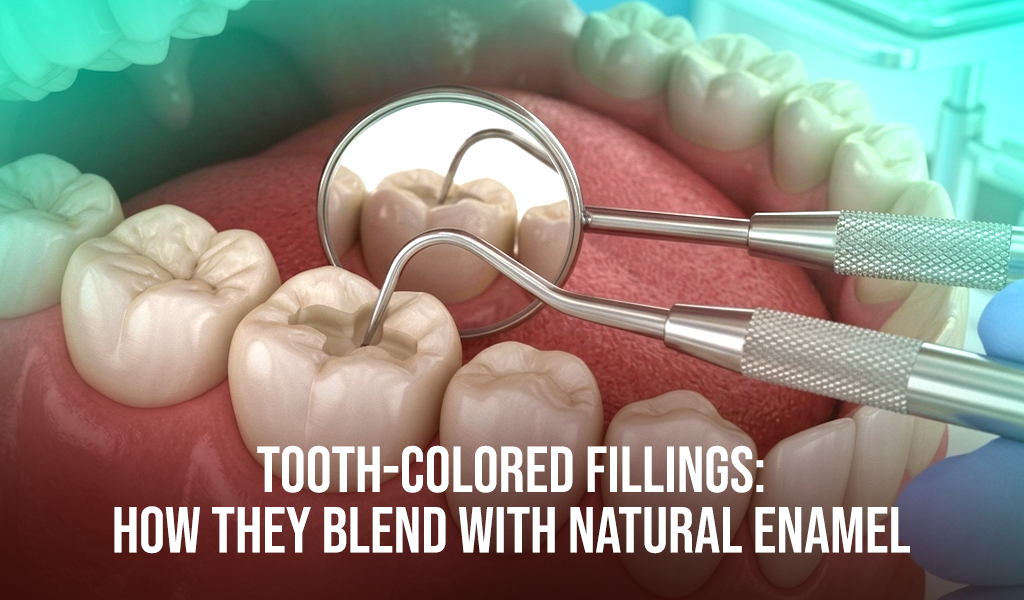
A cavity may be small, but the thought of having an obvious filling may make people feel hesitant to obtain dental treatment. Today, however, there are more natural-looking fillings.
Tooth-colored fillings can be carefully shaded and shaped to match the surrounding enamel, unlike the traditional metal amalgam fillings. But how do they get such a natural appearance?
Let’s examine the mechanics of tooth-colored fillings, their advantages and why they have become the preferred treatment for decayed teeth as cavity filling.
What are Tooth-Colored Fillings?
Tooth-colored filling materials are usually composed of a composite resin that is the same color as a natural tooth. The resin is filled with a mixture of plastic and fine pieces of glass or ceramic that can be molded and buffed to mimic the structure of natural teeth.
They are mainly used for repairing teeth that have decayed, but dentists might also utilize composite resin to treat some minor chips, leaky spots and cosmetic flaws.
The benefit is that the shading can be customized to fit the natural color of the tooth, which means that it will be much less visible when you smile or talk.
Why Do These Tooth Colored Fillings Appear So Natural?
Natural teeth are not all the same shade of white. They have slight color differences, translucency, brightness and texture. A good tooth-colored filling takes these characteristics into account.
The dentist will have the opportunity to choose a shade of composite that matches the adjacent tooth during treatment. The material can then be added on and moulded to create the look of the natural tooth.
The seamless look with natural-looking fillings is achieved by several factors:
- Shade matching
- Layering
- Shape is preserved
- Polishing
- Detailing
The Process Of Placing A Tooth Colored Filling
Multiple steps are typically required to obtain a composite filling. Let’s know about them and make the process smooth for you.
1. Examination and Diagnosis
The dentist checks the tooth first to determine the decay’s severity. Sometimes, X-rays may also be ordered to help determine what is going on under the skin’s surface.
2. Removing the Decay
Carefully removing the decayed part of the tooth. The dentist will try to remove as much of the unhealthy tissue as possible before cavity filling.
3. Preparing the Tooth
Tooth cleaning and preparation to ensure that the restorative material bonds properly to the surface of the tooth.
4. Selecting the Shade
The dentist chooses the composite resin colour that most closely resembles the colour of the natural tooth. It is especially crucial if the filling is in a front tooth that will be visible in the smile line.
5. Applying the Composite
The area is filled with the composite material. It can be used in multiple layers depending on the restoration. A special curing light can shape each layer prior to the cavity filling being hardened.
Benefits of Tooth-Colored Fillings
Cosmetic looks are evident, but cosmetics are not the only reason composite fillings are popular. How are they good for you? Let’s explore.
Natural Appearance
The color-matching of the filling to the tooth is a very appealing feature of composite fillings, especially for front teeth.
Conservative Tooth Preparation
The dentist may be able to maintain more healthy tooth structure in some cases, since the composite resin will bond directly to the tooth structure.
Versatile Application
Poly-composites can be employed for a range of small to moderate restorations as well as for some minor cosmetic repairs.
Comfortable Restoration
After the proper placement and adjustment, the filling should feel comfortable when biting and chewing, with natural-looking fillings.
Immediate Improvement
The tooth may look restored right after the treatment, and in many cases, the filling is shaped and polished during the same treatment.
Can Tooth Colored Fillings Last?
While composite fillings can offer a good restoration for many cavities, there are a number of factors that can influence composite filling performance.
The position of filling is important. A small filling on a front tooth will have different forces acting upon it than a large filling on a back molar.
Other factors include:
- The size and depth of a cavity.
- The place in the mouth where the tooth is found.
- Bite pressure
- Oral hygiene
- Eating habits
- Bruxism (grinding or clenching of teeth)
- Quality of the restoration
- Regular dental care
Your dentist will be able to tell you if a tooth-colored filling will work for your tooth.
How Much Time Do Tooth-Colored Fillings Last?
There is no single lifespan that applies to every composite filling. Some will last for many years, and others will need to be replaced earlier depending on circumstances. A filling’s life can be prolonged by good oral hygiene care and regular check-ups.
To preserve your restoration:
- Clean teeth twice a day with fluoride toothpaste.
- Brush between teeth frequently.
- Do not bite on objects that are very firm and hard.
- Reduce excessive sugary foods and beverages.
- If you have teeth grinding, talk about it.
- Get regular check-ups from your dentist.
Keep in mind that a filling will replace a decayed area, but the tooth around it can still decay even with the filling.
Do Tooth-Colored Fillings Stain?
Over time, composite resin may stain, especially if exposed to strongly colored foods and beverages often.
Typical stains are caused by:
- Coffee
- Tea
- Red wine
- Tobacco
- Some very dark-colored foods
Proper oral care will ensure that the restoration looks the same as it did on day one. Once a cavity filling is stained or worn, the dentist can determine if it should be polished, repaired or replaced.
Final Thoughts
The tooth-color fillings restore and are aesthetically attractive. Using shade-matched composite resin, dentists can fill cavities and design a filling that closely mimics the surrounding natural enamel.
Appearance, flexibility and adhesive properties of natural-looking fillings make them a favorite choice for numerous dental restorations.
The right filling, however, will depend on the tooth and the amount of damage done. Your dentist will be able to evaluate your situation and make a recommendation for treatment.
Frequently Asked Questions
What are tooth-colored fillings made of?
Tooth-colored natural-looking fillings are usually composed of composite resin, which is specifically engineered to closely resemble the natural color of teeth.
How do tooth-colored fillings fit in with the natural enamel?
Dentists carefully match the shade of the filling and carefully mold and polish the composite to give it a natural appearance.
What is the lifespan of tooth-coloured fillings?
Tooth-colored cavity filling can last for many years, depending on their size, placement, and how often they are used, if they are cared for properly, and if they are checked regularly by a dentist.