



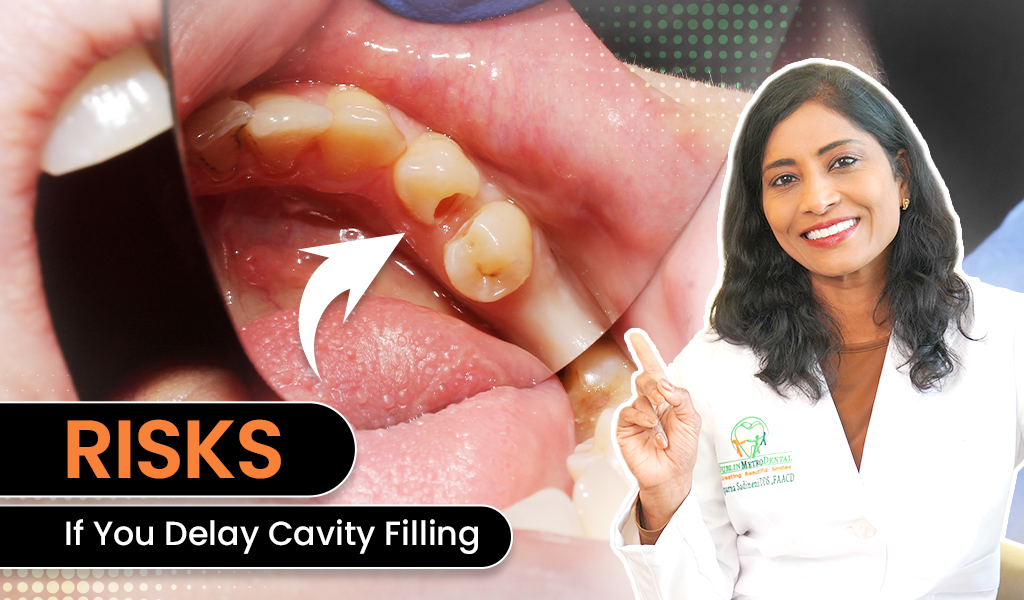
Are you still waiting to get a cavity filling? Waiting can seem like the answer if you think you can simply get by until it’s more convenient. In reality, though, what starts as a relatively inexpensive procedure can soon become downright costly. In this article, we discuss what really happens when a person waits to get a filling on a cavity, what the risks are, and why it is so important to take good care of your teeth.
Why is Cavity Filling Important?
A cavity filling, also known as a filling, is a type of dental reconstruction that fixes a tooth that has been compromised by a cavity. When bacteria in the mouth work to digest the sugars present in foods, they create acids that dissolve the tooth’s enamel. After a cavity develops, the tooth cannot repair itself.
Its Importance
- Precludes decay from spreading
- Restores strength to the tooth
- Prevents infection and pain
- Saves you from more complex procedures later
If cavities are treated in time, a filling may only be required. However, should treatment be sought late in life, deterioration will occur silently.
What Happens When You Delay Cavity Filling?
1. Continuous spread of tooth decay
Cavity sizes are never constant. They will keep progressing until the decay reaches deep inside the tooth from the enamel to the dentin layer until it reaches the pulp. When this happens, the longer it takes, the harder it becomes to treat.
2. Teeth sensitivity
One of the first indications that a dental condition is deteriorating is sensitivity. You may experience discomfort with these foods:
- Hot or cold drinks
- Sweet foods
- Acidic items
The more the cavity expands, the more sensitivity can progress to persistent pain, primarily in the chewing process.
3. Risk of tooth infection
When the bacteria from the decay reach the pulp, or the nerve and blood vessel part of the tooth, it can result in infection. Infection of the tooth can result in:
- Severe toothache
- Swelling – swollen gums, face, or both;
- Fever
- Formation of abscesses
Otherwise, the infection may spread from the tooth and move into the tissues around it.
4. Weak & cracked teeth
As the decay increases, the tooth becomes weakened. The risks associated with such a tooth include:
- Cracks
- Chips
- Broken teeth
Often, a damaged tooth may be beyond repair and may require a crown or even extraction if it is weakened by disease.
5. Chances of bigger treatments like root canal or tooth extraction
An easy dental filling can rapidly develop into:
- Root canal procedure, in case the pulp is infected
- Extraction of the tooth, in cases where there is extensive damage
Such procedures take more time, money, and recovery compared to an early filling.
How Delaying A Cavity Filling Affects Your Overall Health?
General health is also related to oral health. If untreated, bacterial infection can be pumped throughout the body through the bloodstream, leading to those health problems.
- Heart disease
- Complications in diabetes
- Respiratory infections
- Weakened immune response
Taking care of cavities at this stage not only helps your teeth but also your health.
Long-Term Effects Of Delaying Cavity Filling
1. Dental abscesses
When the bacteria penetrate to the root of the teeth, they create painful infections filled with abscesses.
2. Jawbone loss
Untreated infections only happen in the tooth and can easily spread to the jawbone, causing it to weaken.
3. Chronic pain
A situation that starts as slight sensitivity can soon escalate to regular toothaches that can interfere with activities like eating and sleeping.
4. Higher treatment cost
Putting off a simple filling can mean a root canal, crown, or extraction down the road.
5. Permanent tooth loss
Advanced breakdown can damage the tooth irreparably, requiring extraction as the only course of treatment.
Can You Wait For 6 Months To Fill A Cavity?
In most cases, no. Though very early-stage cavities can be watched under professional supervision, most cavities progress worse in just a few months’ time. Once the enamel is damaged, natural healing of the tooth is no longer possible.
Visit your nearest Dublin dentist, who will evaluate the stage of decay and recommend timely treatment in order to avoid further complications.
Signs You Shouldn’t Ignore
If you notice the following, you need to seek immediate dental care:
- Tooth sensitivity or pain
- Visible dark spots or holes
- Poor oral hygiene
- Swollen or bleeding gums
- Pain while chewing
These can be indicative of advanced decay.
How To Prevent Cavities & Avoid Delays?
Toothbrushing twice daily using fluoride toothpaste
- Floss daily
- Constrict sweets and acidity-producing foods
- Drink plenty of water
- Visit dublin dentist for checkups every six months
Routine visits also allow for the detection of cavities before they become serious problems
Frequently Asked Questions
Q. What do I risk if I wait too long to fill a cavity?
Answer. The cavity will get worse and could result in infection, root canal treatment, or even loss of the tooth.
Q. Can a cavity heal on its own?
Answer. No, once the enamel is destroyed, the only treatment is a filling of the cavity.
Q. Does it increase the treatment cost if filling is delayed?
Answer. Yes, early fillings are way cheaper compared to root canals or extractions.
Final Thought
Waiting to fill a cavity, even though it may seem innocuous, actually poses potential risks to health. A cavity won’t wait, and neither should you. Treatment will save your tooth, eliminate pain, and protect your health.
If you notice a possible cavity or are in need of a dental checkup, please contact Dublin Metro Dental today. One oral filling can prevent problems from becoming big pains in the future.